How to read a Carfax report
A Carfax report runs to several pages of dates, codes and tables. This guide walks through a real one, our sample 2012 RAM 1500 Express, and shows where to look first and what should worry you.
By the Carfax Vin Check team · Updated
Start with the summary
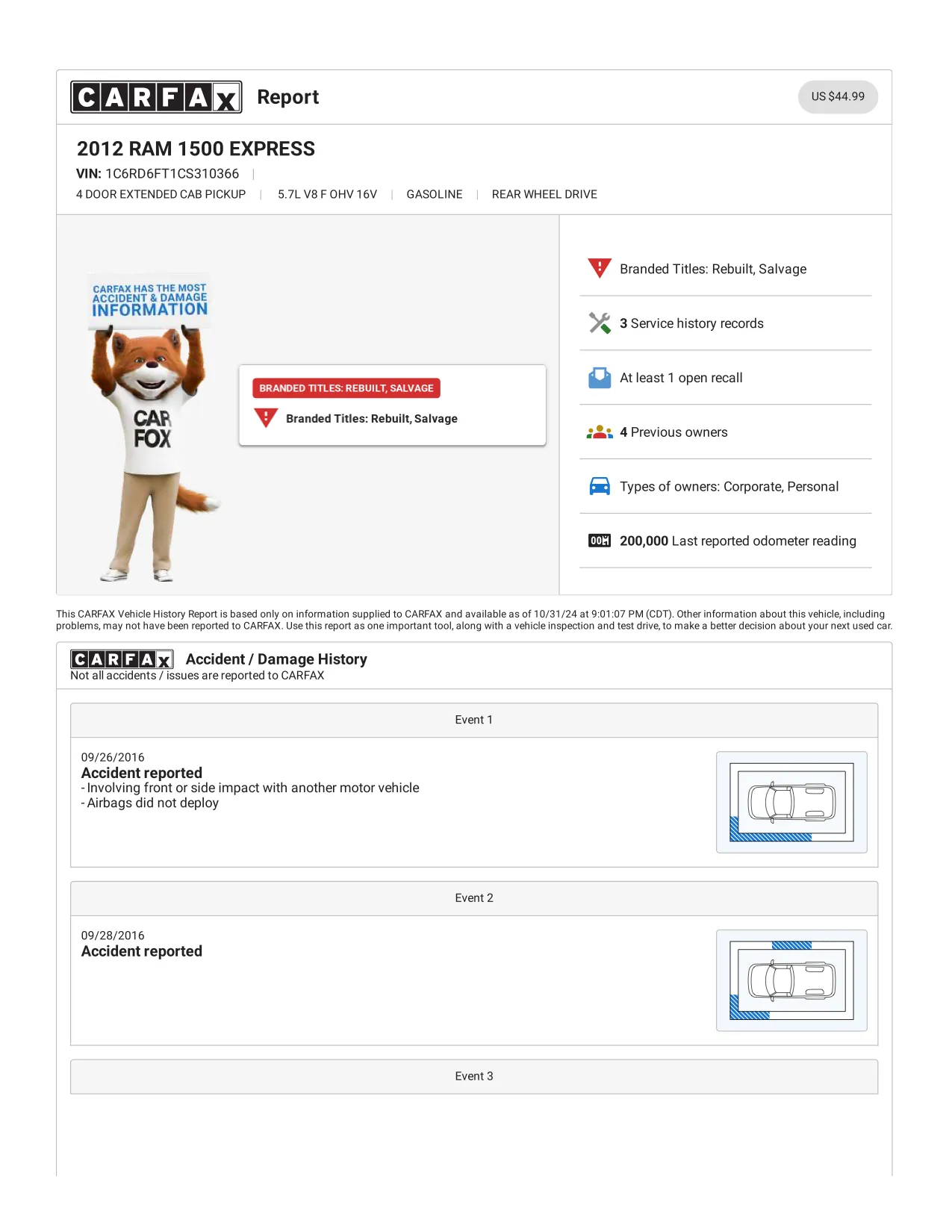
The top of page one is the whole report in a few lines. Before reading anything else, check that the VIN and the vehicle description match the car in front of you: year, model, body style and engine.
Then read the summary items. On our sample they are blunt: branded titles: rebuilt, salvage, three service records, at least one open recall, four previous owners of two types (corporate and personal) and 200,000 miles last reported. The branded title alone tells you this truck has been written off and rebuilt.
Accident and damage records
Each event has a date and a description. Read three things in each one: where the car was hit (front, side, rear), whether airbags deployed, and whether it was towed or disabled. A car towed from the scene took a harder hit than one driven away.
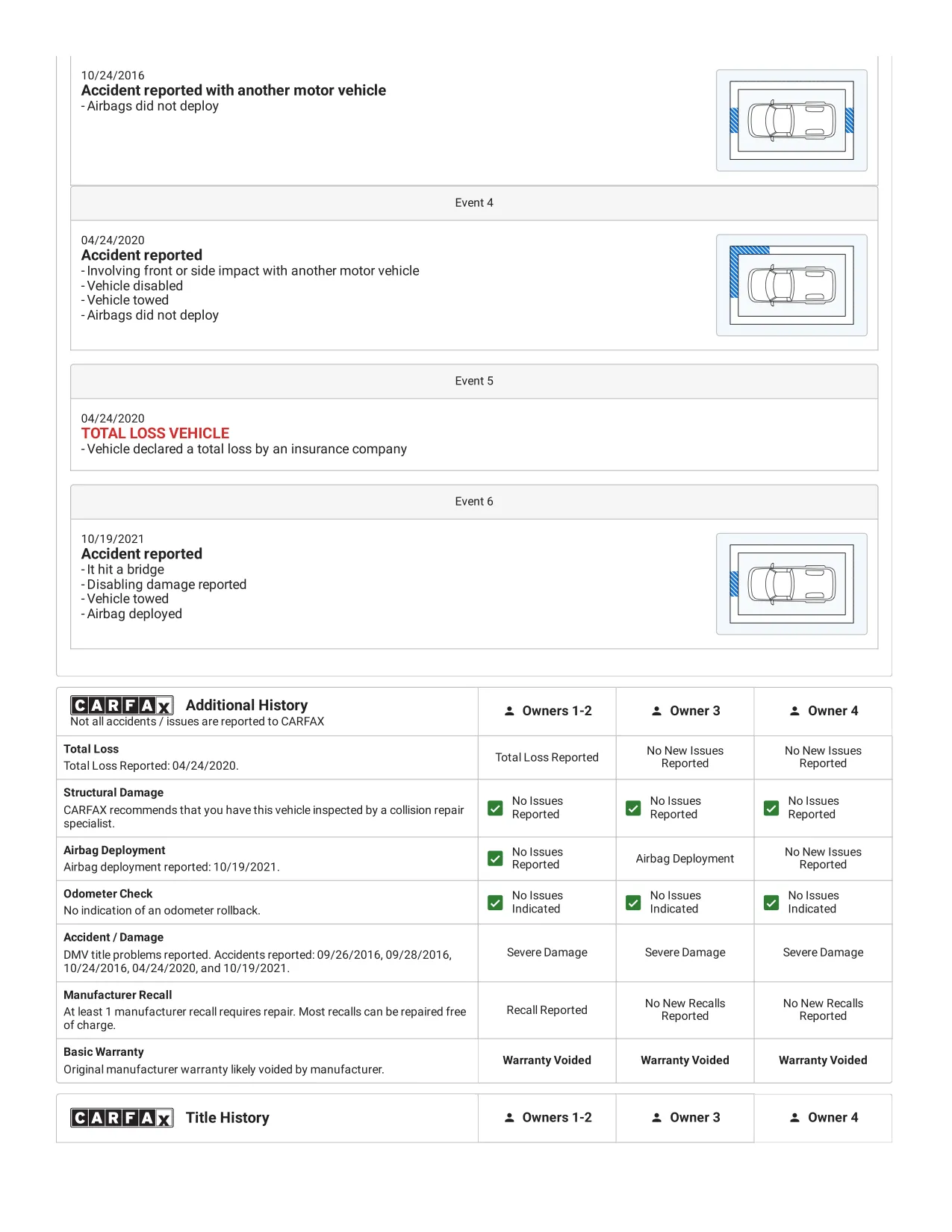
The sample lists six events between 2016 and 2021. The ones that matter most: an accident in April 2020 after which the truck was disabled and towed, the insurer declaring it a total loss the same day, and in October 2021 a collision with a bridge that set off an airbag.
The additional history table
On page two, a grid checks each owner's time with the car against the serious problems: total loss, structural damage, airbag deployment, odometer rollback, and more. Each cell reads “no issues reported” or shows the problem and its date.
This is the fastest way to see when something happened relative to who owned the car. On the sample, the total loss and the airbag deployment are both flagged, each with its date, while the odometer check shows no sign of a rollback.
Title brands and owners
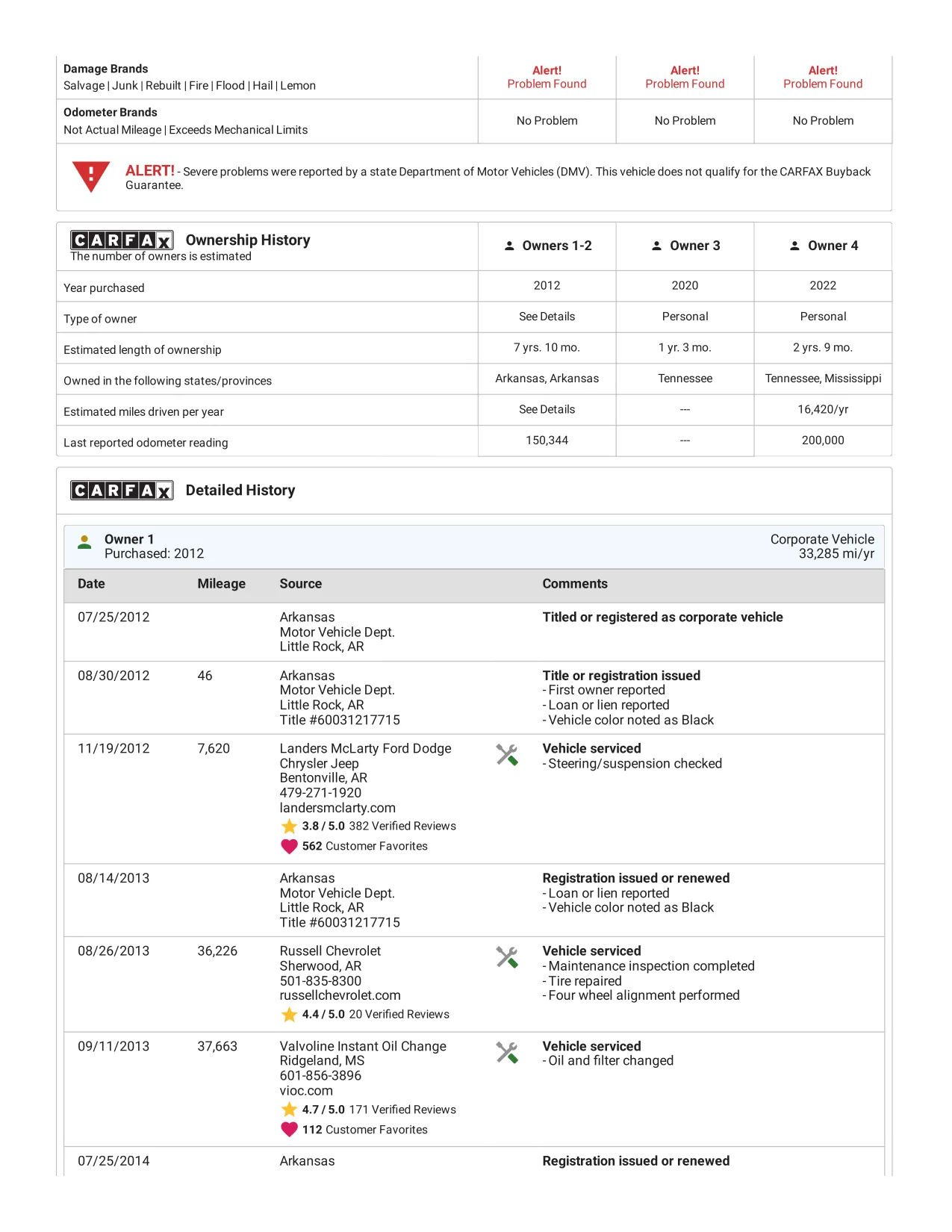
Page three checks the title against every brand a state DMV can issue: salvage, junk, rebuilt, fire, flood, hail, lemon and others. On the sample, the damage brands check shows an alert. A clean line here is one of the best things a report can tell you.
The ownership table sits below it. For each owner you get the year they bought the car, the type of owner (personal, corporate, fleet, rental, lease), where it was registered and roughly how far it was driven each year. A rental or fleet history means hard use; very short ownerships in a row can mean a problem each owner wanted to pass on.
The detailed history
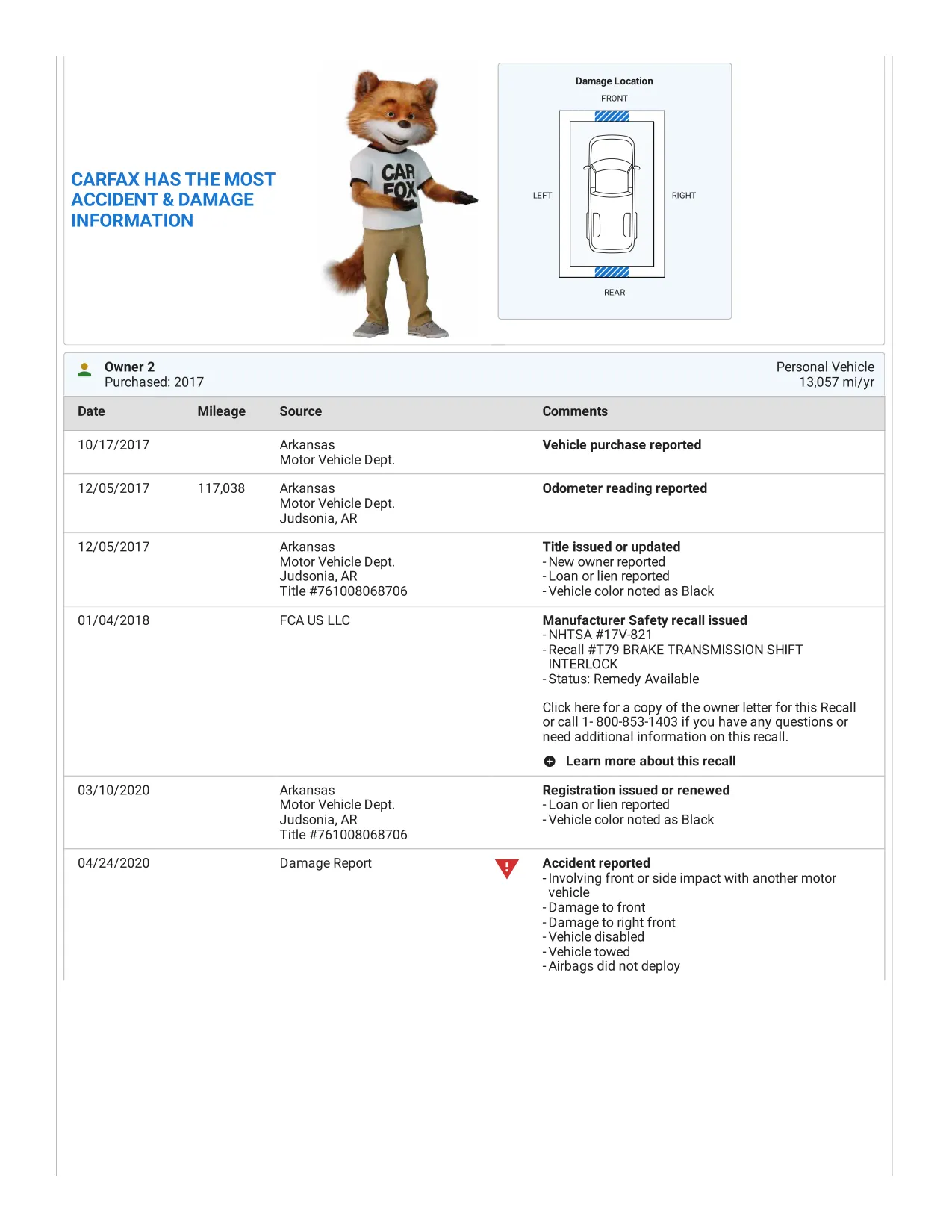
The rest of the report is the car's life in date order, owner by owner: registrations, title transfers, odometer readings, service visits, inspections, accidents and recalls. It's long, but it's where you confirm the story. Look for:
- Odometer readings that always go up. On the sample, the second owner's record shows 117,038 miles in December 2017.
- Registration every year. A gap of a year or more can mean the car sat after damage, or was somewhere records don't reach.
- Loans and liens. A lien reported on the title matters if you're buying privately: make sure it's been paid off before money changes hands.
- Recalls. The sample shows recall NHTSA #17V-821, for the brake transmission shift interlock, with a remedy available.
The last pages are a glossary. If a term in the report isn't clear, it's explained there.
Red flags
Any of these is a reason to stop, ask questions, and get an inspection before going further:
- Salvage, rebuilt, junk, flood, fire or lemon title brands.
- A total loss declared by an insurer.
- Structural or frame damage reported.
- Airbag deployment.
- An odometer rollback warning, or readings that go down.
- Registration in a flood-hit area around the time of a flood.
- An open lien on a private sale.
- A VIN on the report that doesn't match the car.
Our sample has at least three: salvage and rebuilt brands, a total loss and an airbag deployment. In a listing it would read as a high-mileage work truck; the report says otherwise.
What a report can't show
A Carfax report shows what was reported to Carfax. An accident fixed privately, or a repair paid for in cash at a shop that doesn't share records, may never appear. A clean report is good news, not a guarantee, so have a mechanic look at any car before you buy it.
To read your own car's report, enter its VIN. It's $7.99 for one report, and you see the vehicle before you pay.
Questions
The title brands and the additional history table. A salvage, rebuilt, flood or lemon brand, a total loss or structural damage changes what a car is worth and whether it is safe to buy, however good it looks.
Not necessarily. A minor accident with no airbag deployment, repaired years ago, may not matter much. Look at where the car was hit, whether it was towed, and whether structural damage was reported, then have a mechanic check the repair.
That nothing was reported to Carfax, not that nothing happened. Accidents settled privately or repairs paid in cash often never reach any database.